Welcome: Fiver Autoparts Co., Ltd
Language:
 ∷
∷

∷
 ∷
∷
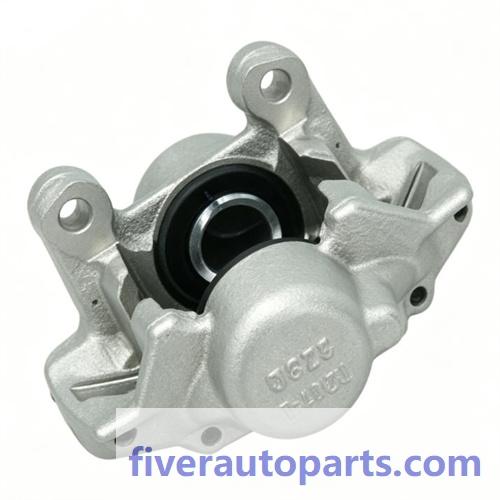
Part Name: Brake Caliper, Pinzas de Freno
Part Number: 1244200283, 2014200483
Applications:
Mercedes-Benz 190D 1984-1989
Mercedes-Benz 190E 1984-1993
Mercedes-Benz 260E 1987-1989
Mercedes-Benz 300CE 1988-1989
Mercedes-Benz 300D 1987-1993
Mercedes-Benz 300E 1986-1993
Mercedes-Benz C220 1994-1996
Mercedes-Benz C280 1994-1996
Mercedes-Benz E300 1995
Mercedes-Benz E320 1994-1995
What is a brake caliper?
Brake calipers are an important part of a vehicle's braking system, located near the wheels and responsible for managing the interaction between the brake pads and discs. This interaction creates friction that slows or stops the vehicle's movement. Brake calipers play a vital role in ensuring efficient braking and safe driving of modern cars and trucks.
Why are brake calipers important? Proper design and performance of brake calipers is critical to a vehicle's overall braking efficiency and safety. Brake calipers must be maintained and inspected regularly to ensure they are working properly as this is vital to vehicle safety. Insufficient brake calipers will significantly reduce braking performance, thereby endangering driving safety. Therefore, regular inspection of brake calipers and pads to identify leaks, excessive wear, or damage is critical to maintaining the reliability of your braking system.

The function of car calipers:
◆ Brake calipers are devices designed to slow down, stop, or keep moving wheels in a stationary position. They are primarily used in vehicles equipped with disc brake systems.
◆ In a car's disc brake system, various components work together: a brake oil pump, a brake disc connected to the wheels, and a brake caliper positioned on the disc. When the brakes are applied, high-pressure brake oil is pumped, pushing the piston inside the caliper. This exerts pressure on the brake pads, causing them to press against the brake disc, resulting in the desired braking effect.
◆ Disc brakes can be categorized into two types: ordinary disc brakes and ventilated disc brakes. Ventilated disc brakes have a gap between two brake discs, allowing air to flow through. Some ventilated discs feature circular ventilation holes, while others have ventilation slots or pre-made rectangular ventilation holes on the disc surface.
◆ Ventilated disc brakes harness the airflow, providing superior cooling and heating effects compared to ordinary disc brakes. The main advantages of disc brakes include their ability to rapidly bring a vehicle to a stop, superior heat dissipation compared to drum brakes, and consistent braking efficiency, which makes them compatible with advanced electronic systems like anti-lock braking systems (ABS).
Contact: Venshan
Phone: 15086654540
Tel: 023-81702127
Email: fiverhope1@gmail.com
Add: Jinyu Road #99, Yubei District, Chongqing ,China



 Fiver Autoparts
