Welcome: Fiver Autoparts Co., Ltd
Language: Chinese ∷  English

Vacuum Pump

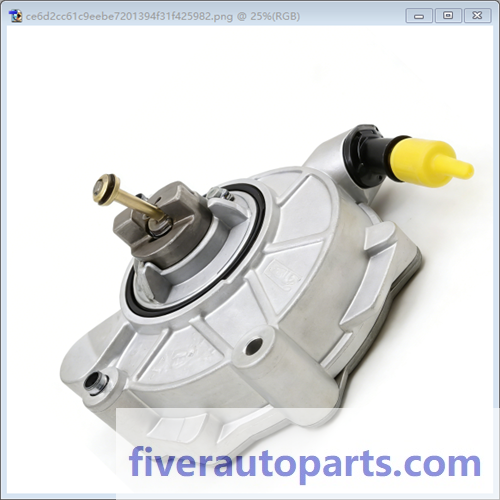
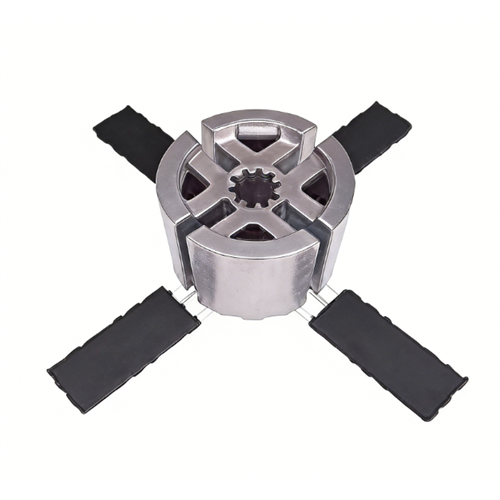
  • Vacuum Pump 14650-00Q2G for Nissan Qashqai II SUV J11 11.2013 -
Vacuum Pump 14650-00Q2G for Nissan Qashqai II SUV J11 11.2013 -

Vacuum Pump 14650-00Q2G for Nissan Qashqai II SUV J11 11.2013 -

  • Brand New
  • High Quality
  • Long Warranty
  • Product description:
  • INQUIRY
Part Name: Vacuum Pump/ Brake Vacuum Pump/ Vacuum Steering Pump Assy

Part Number: 14650-00Q2G,  146502327R,  6080900900

Applications:

Nissan Qashqai II SUV J11, J11 1.5 dCi 11.2013 - 
Nissan Qashqai II SUV J11, J11 1.5 dCi 06.2018 - 
Nissan NV250 Bus X61 dCi 115, dCi 80, dCi 95 07.2019 - 
Nissan NV250 Van X61 dCi 115, dCi 80, dCi 95 07.2019 - 
Nissan Qashqai II VAN J11 1.5 dCi 05.2015 - 
Mercedes-Benz Citan Panel Van W415 11.2012 - 08.2021
Mercedes-Benz Citan Traveliner   Estate 415  11.2012 - 08.2021
Mercedes-Benz A-Class W177  03.2018 - 
Renault Kadjar HA, HL  06.2015 - 


What is Vacuum Pump?
The brake booster vacuum pump provides the vacuum needed for the power brake booster to perform. If it fails or has a problem, the car will be left without  assisted braking. Without the brake booster, the brake pedal will be stiff and will require more effort to stop the car. Vacuum  boosters  will probably be with us for a long time. It is the most efficient and economical way to amplify the force exerted by the driver. But where the booster gets its vacuum. Many auto parts providers have been using vacuum pumps to power the brake booster on their vehicles. For a vacuum brake booster to work, it needs a source of vacuum. In the past all that was needed was a port on the intake manifold. Now, vacuum pumps are the choice for negative pressure power.

Why must be a Vacuum Pump?
Vacuum pumps have been used on diesel engines for  more than 40 years, typically as a diaphragm pump. These pumps were neither efficient nor reliable.Most modern European cars use either an electric vacuum pump or a pump driven by a sprocke.In every piston engine, vacuum is created during the intake stroke as the piston goes down in the cylinder and the intake valves are open. But modern engines have  changed. Increased efficiency has reduced the amount of vacuum available to the brake booster. Engines have been downsized to 2.0- and even 1.4-liters. This means that  there is less displacement to create the vacuum. Variable valve timing has further diminished the vacuum generated because the timing of the opening might be timed  to allow a scavenging effect so some of the intake air makes it past the exhaust valve. This air is intended for the catalyst so unburned hydrocarbons can be burned. Turbocharging has also eliminated traditional vacuum in the intake manifold. The turbocharger produces positive pressure or boost in the intake manifold. The only time  an engine might be under vacuum is when the engine is decelerating, and the throttle is closed.
FIVER's Advantages on Vacuum Pump:
As OE supplier, we practice with very strict quality control, follow the TS16949 strictly.
With 3 years long term quality warranty.

Custom design, new developing based on customer request is available.

Brake Parts