Welcome: Fiver Autoparts Co., Ltd
Language:
 ∷
∷

∷
 ∷
∷
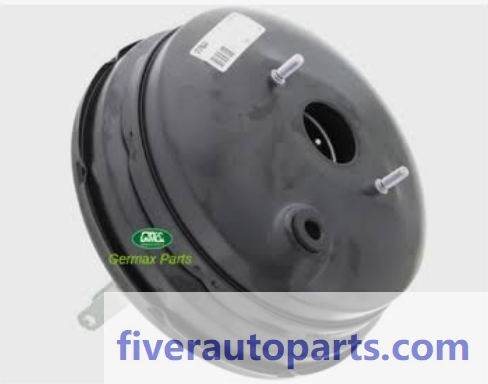
If the master brake cylinder, brake hoses, brake calipers, brake pads and other related components are all in good working condition, yet the brake pedal feels stiff and hard to depress, the vacuum brake booster is confirmed to have air leakage and functional failure.
Apart from a stiff pedal, a faulty booster can trigger various abnormal braking sensations. Below we sort out three frequent malfunction symptoms with root cause analysis:
A failed vacuum booster will never lead to a spongy brake pedal; on the contrary, a soft pedal proves the booster’s vacuum assist function works normally. The spongy, sinking pedal is usually caused by mechanical or hydraulic issues: the master cylinder piston gets stuck after working stroke, mechanical jamming of the brake pedal assembly, or air trapped inside brake lines.
Symptom 2: The brake pedal is stiff for the first 0.4 seconds when pressed, then depresses rapidly – Is there a brake fault?
Two scenarios for reference:
1. Normal factory design (No malfunction) This pedal feedback is pre-tuned for certain vehicle models through matched caliper and brake pad design. The design prevents sudden wheel lock-up during braking, which requires no repair.
2. Defective vacuum booster If the stiff initial feel is not an original factory calibration, the root cause lies in substandard internal rubber diaphragm of the booster. Diaphragms with excessive hardness and insufficient elasticity will ruin consistent pedal feel. Top-tier vacuum booster manufacturers enforce strict standards on the hardness and elasticity of rubber diaphragms to deliver smooth, stable braking feedback.
Symptom 3: A constant airflow noise occurs after installing a brand-new vacuum booster – Does this mean the booster has air leakage?
The noise mainly originates from mechanical friction, or an improperly engineered foam silencer filter. A foam filter silencer is fitted at the neck of the booster pushrod to balance air intake and exhaust inside the booster housing. Its tightness directly impacts noise performance:
· Over-loose filter: The booster cannot retain vacuum pressure effectively, weakening braking assist force;
· Over-tight filter: Air flow is restricted while entering/exiting the housing, generating obvious hissing airflow noise, similar to the sound produced when inhaling or exhaling through a narrow opening. Professional vacuum booster manufacturers optimize filter structure and assembly tolerances at the design stage to eliminate abnormal noise and improve end-users’ driving experience.
Contact: Venshan
Phone: 15086654540
Tel: 023-81702127
Email: fiverhope1@gmail.com
Add: Jinyu Road #99, Yubei District, Chongqing ,China

 Fiver Autoparts
